Comfortable Angled Spotting Scope UK: Hide Setup Guide
A comfortable angled spotting scope can reduce the need to crouch behind a straight eyepiece, especially in a hide, but the tripod and seat height still determine posture. Check eye relief, total carrying weight and focus controls before buying. If you cannot try the setup seated, do not assume an angled body will solve neck or mobility problems.
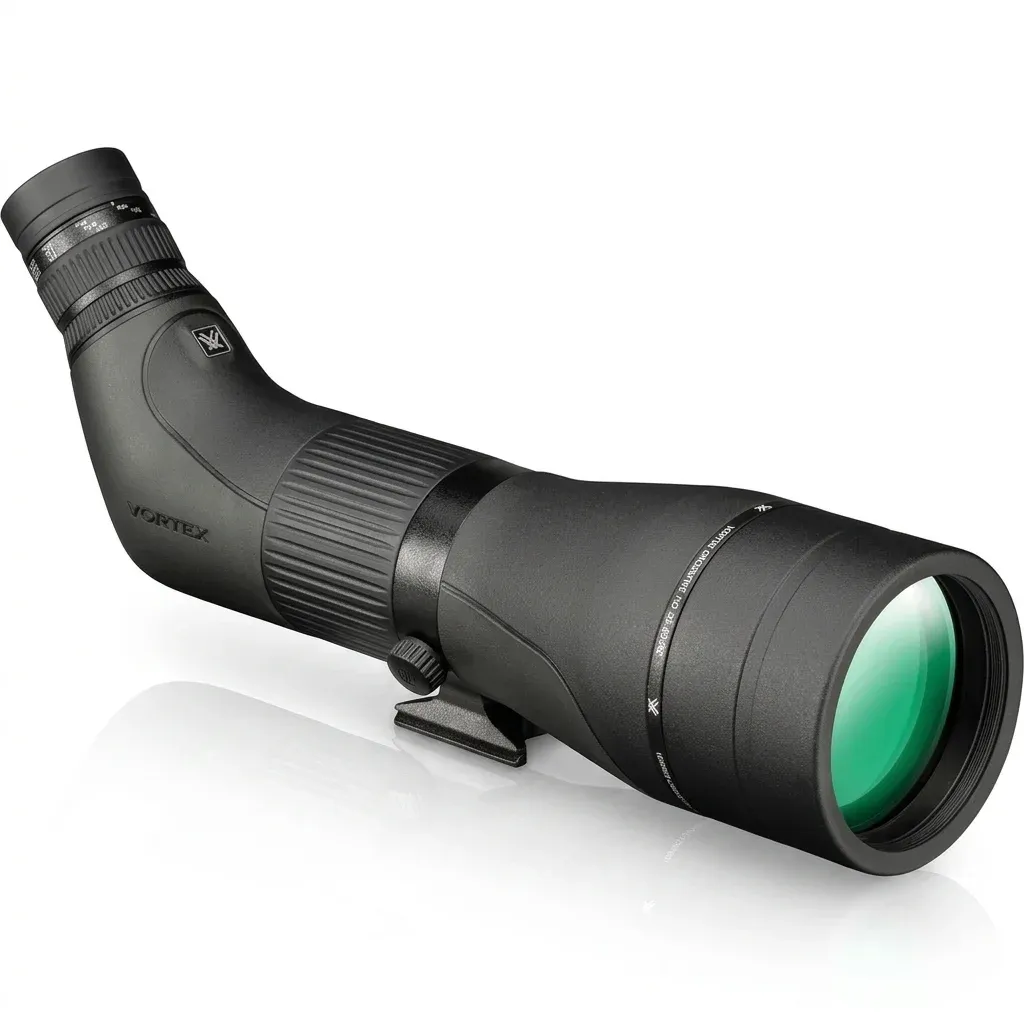
For a countryside or coastal observer who wants to sit in a hide for more than a quick glance, comfort is a buying requirement rather than a luxury. The useful test is whether the eyepiece comes to you while your shoulders remain relaxed. If you have to lean, twist or keep raising the centre column, the setup is wrong even when the scope itself is well reviewed.
Build the seated position before choosing the scope
- Sit where you expect to observe. Use a typical hide bench or chair and keep both feet supported.
- Set the tripod low and stable. Extend thicker leg sections first and avoid relying on a raised centre column.
- Bring the eyepiece to a neutral head position. Rotate the scope collar if the body permits it; do not crane towards the glass.
- Check the controls with cold or gloved hands. Focus and zoom should be identifiable without a complicated sequence.
- Repeat the test standing and sharing. A partner of a different height should not require a complete tripod rebuild.
The Opticron telescope guide explains the genuine angled-body advantage: the back, shoulders and neck can be more relaxed, the tripod can sit lower, and people of different heights can share more easily. It also gives the honest counterpoint that a straight scope may be faster for following movement or working from a vehicle or confined space.
Comfort features to check one by one
| Check | Why it matters | Failure boundary |
|---|---|---|
| Eye relief | Space between eye and eyepiece affects whether spectacle wearers see the full field. | A specification cannot replace trying your own glasses and face position. |
| Tripod height | A lower, wider setup is usually steadier and reduces the need to bend. | An extended centre column can reintroduce vibration and poor posture. |
| Focus control | A broad, predictable control is easier to find during a long session. | Stiffness or fine control that you cannot operate comfortably is a reason to choose another model. |
| Total carried mass | The scope is only one part of the load; the tripod, head, cover and bag all count. | A comfortable view in the shop does not prove the kit is practical on the walk to the hide. |
How the Crossfire HD fits this comfort brief
Vortex's official CF-80A specification lists an angled body, 18.0 mm eye relief, a 20–60x zoom, an 80 mm objective, Arca-Swiss compatibility and a weight of 53 oz (about 1.50 kg). Those facts support a mostly stationary hide or viewpoint role. They do not prove that every spectacle wearer will see the full field or that every viewer will find the focuser easy.
The 80 mm body is not a lightweight walking choice once suitable support is included. The current Vortex Opti product page displayed £290.57 when this guide was checked on 20 July 2026; use the live product page for the current price and terms. If carrying weight or hand strength is the main objection, compare a smaller body in person instead of buying the larger objective on specification alone.
Use a real try-before-buy session
The RSPB suggests its optics demonstration events in its beginner's guide to birdwatching. WWT's Optics Days likewise let visitors compare binoculars and scopes on tripods. At any demonstration, spend several minutes seated, refocus from near to far, zoom without losing the subject and pack the complete kit once. A thirty-second look through bright glass is not a comfort test.
A practical hide routine
- Arrive with the scope capped and the tripod legs secured.
- Keep legs and bags out of the route used by other visitors.
- Start at low magnification to acquire the bird before zooming.
- Back the zoom down if vibration, dimness or a narrow field makes viewing harder.
- Dry external moisture and refit caps before storage; follow the maker's cleaning instructions.
Comfort does not override fieldcraft. The RSPB beginner's guidance puts birds first, advises against disturbing them and tells visitors to follow signs and local instructions. If a better angle would disturb wildlife or block another visitor, do not take it.
Who should choose something else?
A straight scope may suit someone who mainly watches from a vehicle or wants the body itself to point directly at a moving subject. A compact scope may suit a long walk better. If the angled eyepiece still forces an uncomfortable position, or the full kit is too heavy to move safely, neither brand reputation nor an 80 mm objective makes it the right purchase.
Continue with the next decision
- Spotting scope vs binoculars decision
- Best birding spotting-scope buyer's guide
- Crossfire HD 20-60x80 specification-led review
Frequently Asked Questions
Is an angled spotting scope always more comfortable than a straight scope?
No. An angled eyepiece can allow a lower tripod and a more relaxed viewing position, but a straight scope can be quicker to aim and may suit a vehicle or some confined hides. Comfort depends on the complete seated setup, not the body angle alone.
What should a spectacle wearer check before buying an angled scope?
Check the maker's eye-relief figure, then try the exact eyepiece with your usual glasses. You should see the full field without pressing into the eyecup; a published number is useful for screening, but it cannot guarantee an individual fit.
How heavy is the Vortex Crossfire HD 20-60x80 angled scope?
Vortex lists the CF-80A at 53 ounces, approximately 1.50 kilograms, before a tripod, head, cover or bag is added. Test the complete carrying weight if the route from the car park to the hide is part of your concern.
Can an angled scope remove neck or mobility problems?
It may reduce awkward positioning for some viewers, but it is not a medical aid and cannot correct a poor seat, unsuitable tripod height or an individual condition. Stop if the setup causes discomfort and seek appropriate professional advice for persistent symptoms.
Check the current Crossfire HD details and terms
View current product details — £290.57